Hair loss is an almost universally distressing experience. As humans, our hair is often one of our defining characteristics, a key part of how we present ourselves to the world. While there are many reasons these changes occur, one of the most common is age-related hair loss [1].
What Causes Age-Related Hair Thinning & Loss?
Age-related hair loss is caused by stress – both internal, cell-level stress, and extrinsic lifestyle stressors such as UV radiation, pollution, smoking, poor nutrition, and it also has a genetic component [3]. As we age, dihydrotestosterone (DHT) levels rise, causing follicular miniaturisation or the narrowing of the hair follicle [4]. This results in ever thinner hair, eventually closing the follicle and ceasing growth [3].
Who Struggles Most with DHT?
High DHT levels are especially common in men, as increasing DHT levels increase androgen receptors, magnifying the response in receptive cells. These receptive cells are located across the frontal and temporal areas of the scalp, as well as across the top of the head; the same areas men typically experience male-pattern baldness or androgenetic alopecia (AGA) [4].
Women also experience thinning and hair loss. AGA affects the front of the head in men, whereas women tend to experience more diffuse thinning and patchy hair loss [4]. Both patterns are different, but equally devastating for those dealing with it.
How Do NAD & Inflammation Affect Hair Thinning & Loss?
Nicotinamide Adenine Dinucleotide (NAD) is a coenzyme essential for cellular energy, metabolism, and DNA repair, and supports energy production and cellular repair. As we age, NAD levels naturally decline [6]. As a result, the cells responsible for growth enter a prolonged resting phase and gradually lose their ability to regenerate [3]. That’s the beginning of hair thinning.
Another key factor is oxidative stress [1]. The result of UV damage, pollution and internal ageing, oxidative stress generates harmful particles called Reactive Oxygen Species (ROS) or free radicals [3]. When these free radicals trigger excessive inflammation, they begin damage the cells, resulting in weaker follicles, thinner hair, and shortened growth cycles [2]. In short: more shedding, less density [3].
What Does Senescence Have To Do With It?
Senescence is the state that cells enter when they should have been cleared out and recycled [1]. These senescent cells, or zombie cells, remain in the body instead of dying, causing damage wherever they accumulate [2].
Senescent or zombie cells secrete pro-inflammatory signals, impairing scalp function and exacerbate oxidative damage [2]. This leads to hair-shaft thinning and slower growth.
How Does NMN Help With Hair Thinning & Loss?
Studies show that supplementing with NMN (nicotinamide mononucleotide), a precursor to NAD (nicotinamide adenine dinucleotide), can help reverse aspects of thinning and hair loss [1].
NMN supports more efficient NAD production, helping the body fight free radicals, reduce inflammation, and support the recovery of pre-loss growth cycles [2]. NMN may also downregulate DHT-responsive genes, including AR and DKK-1, while upregulating growth factors such as VEGF (Vascular Endothelial Growth Factor) and β-catenin [2]. These growth factors improve blood flow, nutrient delivery, and directly influence hair growth [2].
How Can We Fight These Forces?
You’re definitely not alone when it comes to figuring out how to stop – or even reverse – the progress of hair thinning and hair loss. NMN is one of our favourite ingredient for healthy ageing [5].
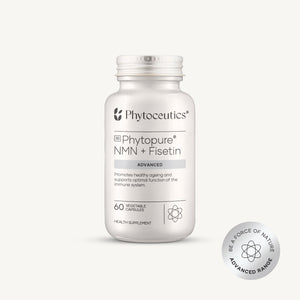
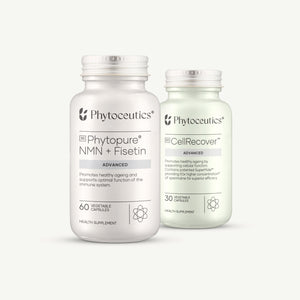
Phytopure® NMN & Fisetin Advanced contains Uthever® NMN as well as fisetin, a powerful senolytic that helps clear zombie cells, reduce inflammation, and give your hair follicles a chance to recover.
Phytoceutics® CellRecover™ Advanced combines spermidine and quercetin, and is formulated to stimulate autophagy – the body’s natural ability to clear damaged cellular components and combat oxidative stress.
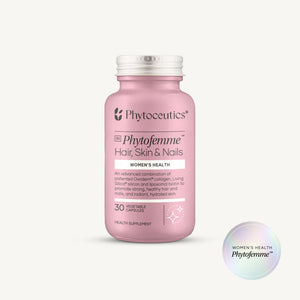
Phytofemme™ Hair, Skin & Nails is a targeted supplement that supports healthy hair, skin, and nails. While it doesn’t contain NMN, it does include Ovoderm®, which provides a unique blend of collagen, elastin, hyaluronic acid, and keratin; Living Silica® (MMST), a highly bioavailable form of silicon that stimulates collagen and elastin synthesis; and liposomal biotin, which supports keratin production. Together, these ingredients support hair health, improve skin elasticity and hydration, and reduce nail brittleness.
Fighting Hair Thinning & Loss One Supplement at a Time
Hair thinning and hair loss can feel like the start of an inevitable decline, but it doesn’t have to be. With targeted supplemental support and a clearer understanding of the underlying drivers of age-related hair changes, it is possible to slow progression and, in many cases, improve early signs of thinning [1].
While we can’t turn back time, the right high-quality supplements can help restore what has been depleted and support a noticeable improvement in hair density and overall hair health.
This content is for informational purposes only and does not constitute medical advice. Always consult with your healthcare provider before starting any new supplement, especially if you are pregnant, nursing, have a medical condition, or are taking prescription or chronic medication.