Fertility is one of the most searched, most misunderstood, and most emotionally loaded topics in women's health – and yet it's still spoken about far less than it should be. In this episode of the Her Health™ Podcast, Dr Lizle Oosthuizen, an OBGYN and fertility specialist, brings clarity, candour, and genuine compassion to a conversation that too many women have too late.
From egg quality and age to egg freezing, miscarriage, IVF, and the fertility questions she gets asked most often, this episode is a guide to understanding your fertility before urgency forces the conversation. As Dr Lizle puts it: know where you stand – because you can't make good decisions without that foundation.
Rapid Fire: What Actually Affects Fertility, Rated
We asked Dr Lizle to rate common factors from zero (no effect on fertility) to 10 (major effect on fertility):
- Age – 10/10: The single biggest factor. Non-negotiable.
- Sperm quality – 9.5/10: Consistently underestimated and under-investigated – more on this below.
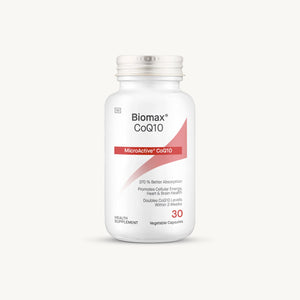
- CoQ10 – 7/10: Evidence points toward benefit, but conclusive data on live birth rates isn't there yet.
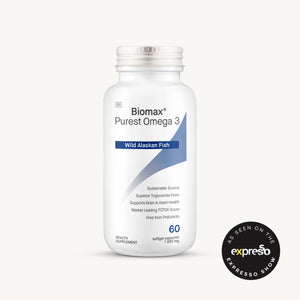
- Omega-3 – 7/10: Supportive evidence – worth taking, particularly for egg quality and general reproductive health.
- Excessive alcohol – 10/10: Significant negative impact.
- Occasional alcohol – 4–5/10.
- Smoking – 10/10: One of the clearest fertility disruptors known.
- Consistent healthy lifestyle – 7.5–8/10: Meaningful, but not a substitute for addressing age or underlying conditions.
- Genetics – 5/10: Less influential than most people assume.
- Hormonal imbalance – 3/10 in isolation; 10/10 if ovulation is affected. Context matters significantly here.
- PCOS (now PMOS) – 8–9/10.
- Endometriosis – 5–10/10 depending on the stage.
The Fertility Landscape in 2026 – Why Are More Women Struggling?
Dr Lizle opened with an important reframe: infertility isn't necessarily becoming more common – it's becoming more visible. Social media has created space for women to share their experiences openly, and a topic that was once heavily stigmatised is now part of mainstream conversation.
That said, she identified one genuine driver: delayed childbearing. Women are having children later – in their late 30s and 40s – for entirely valid reasons: career, financial stability, finding the right partner. But biology hasn't moved with that shift.
"The further we push it, the older our eggs are getting – and the harder it's going to be to fall pregnant."
The gap between biological prime and social readiness for parenthood has never been wider – and egg quality is the variable that pays the price.
When Is Fertility at Its Peak?
Biologically, your 20s. Egg supply, egg quality, and success rates per cycle are all at their highest. Into your early-to-mid 30s, fertility remains good – but the picture changes more rapidly after 35, when egg quality begins to decline more steeply.
For men, the conversation is similar but less widely acknowledged. Sperm quality – specifically DNA fragmentation and the rate of chromosomal abnormalities – increases with age. Older male partners carry a measurably higher risk of their partner experiencing a miscarriage, regardless of her age. Men may continue producing sperm well into their 60s and 70s, but the quality of that sperm is a different matter entirely.
Dr Lizle's framing on this was important: infertility is rarely a female problem or a male problem. It's almost always a couple's problem. Roughly a third of the time there's a primary female factor, a third of the time a primary male factor, and a third of the time it's a combination of both. Investigating only one partner while ignoring the other will not give you the full picture – and won't give you the best outcome.
What Can You Do to Support Egg and Sperm Quality?
Dr Lizle used a memorable analogy for eggs: they're like a dysfunctional boss. Do everything right and they'll give you no credit. Do one thing wrong and they'll make you pay for it.
You cannot physiologically improve an egg's intrinsic quality. What you can do is remove the things that disadvantage it – smoking, excessive alcohol, recreational drugs, significant weight imbalance – and support the environment in which it develops.
The Two Supplements Dr Lizle Recommends for Egg Quality
CoQ10 (Coenzyme Q10)
Her primary recommendation, especially for women over 35. The mechanism is sound – CoQ10 is an antioxidant that may support mitochondrial function in eggs, which is central to egg quality. The evidence points toward better quality eggs and better embryo development, even if the translation to live birth rates hasn't been conclusively demonstrated. Dr Lizle put most of her patients on it – younger ones included.
Omega-3 (fish oil)
Her second non-negotiable. A high-quality fish oil helps protect against free radical damage and supports the broader reproductive environment. She recommended omega-3 alongside CoQ10 as a foundational combination for both female and male patients trying to conceive.
Miscarriage: When to Investigate, and What Causes It
One in four women will experience a pregnancy loss. It is extraordinarily common, deeply underacknowledged, and rarely spoken about – until someone else opens up about it, and suddenly the room fills with shared experience.
A miscarriage is defined as a positive pregnancy test that turns negative. Even a chemical pregnancy – where you've had a positive test confirmed and then started bleeding – counts. You don't need an ultrasound or blood levels to establish that a loss occurred.
Dr Lizle's key clinical update: the threshold for investigation has moved. It used to be three pregnancy losses before further workup was recommended. That's now two – and the American guidelines have recently aligned with this position. If you've had two pregnancy losses, consecutive or not, it's worth investigating.
What Causes Miscarriage?
Around 50–60% of first-trimester losses are chromosomal (genetic causes) – the embryo was abnormal and simply couldn't continue developing. This is not something that can be prevented; it's a feature of human reproduction. But it's not the only cause, and Dr Lizle was clear that miscarriage should always be treated as a symptom – not a diagnosis in itself.
Other causes she investigated included structural abnormalities of the uterus – including a congenital septum or scar tissue. Chronic inflammation of the uterine lining (endometritis) – specifically a bacterial imbalance that creates an unfavourable environment for implantation. Genetic clotting disorders, or an autoimmune condition called antiphospholipid syndrome, which can cause late as well as early pregnancy losses. Cervical weakness in the second trimester, which may present as painless membrane rupture. Foetal developmental abnormalities or defects – cardiac or neurological – that prevent the pregnancy from continuing.
Egg Freezing: What It Involves, When to Consider It, and What to Expect
Dr Lizle's own experience was woven into the conversation: she froze her eggs at 34 and 35 – two cycles, 23 eggs cumulative – because she saw women in her consulting room every single day saying the same thing: "if only I had known sooner".
The ideal time to freeze, balancing egg quality against the actual likelihood of needing to use frozen eggs, is around 35. But Dr Lizle was emphatic that this doesn't mean women in their late 30s have missed the window.
"If we would offer you IVF, we can offer you egg freezing. It just changes how many eggs we're aiming for."
Younger women need fewer eggs to achieve a good statistical probability of a future pregnancy – roughly 15 is a strong result in your early 30s. Older women need more, often 20 or above, which may require more than one cycle. She recommended women start thinking about egg freezing proactively from around 32–33, partly because the process is expensive and time to save matters.
The egg freezing process involves hormonal stimulation to encourage multiple follicles to develop, followed by an egg retrieval procedure. The eggs are then frozen and stored. The number retrieved per cycle can vary significantly – and not every egg will successfully fertilise or develop into a viable embryo when the time comes to use them.
When Can Surrogacy Be Considered?
Most fertility challenges come down to an egg factor, not a uterus-related one – which means surrogacy is only considered when a patient has a permanent and irreversible condition preventing her from carrying a pregnancy, most commonly a prior hysterectomy. It's also a common path for same-sex male couples, who don't have a uterus to carry a pregnancy themselves.
The process itself requires a High Court application, with a judge ruling on whether the legal requirements for surrogacy are met. Both the intended parent and the surrogate go through psychological and medical evaluations, and significant costs are involved – including the surrogate's medical aid, life insurance, and ongoing appointments throughout the pregnancy.
"It's not so much of a Kardashian situation where you can just say I don't want to be pregnant, or this isn't working, and let's go and do surrogacy."
Surrogacy, Dr Lizle emphasised, is only considered when there's a serious medical reason a patient can't or shouldn't carry a pregnancy – not a matter of preference.
When to Seek Help – and What to Expect from a Fertility Assessment
The general guidelines: under 35, investigate after 12 months of trying. Over 35, investigate after 6 months. Over 40, come in before you start trying, so the assessment can inform your approach from the outset.
If you have a known condition – PCOS (now officially renamed PMOS), endometriosis, fibroids, an autoimmune condition, or any chronic medication use – don't wait for the timelines above. Come in sooner.
A first appointment is not a commitment to IVF. It's a map of where you are – egg reserve, likely egg quality, any structural or hormonal obstacles. From there, you make informed decisions.
Community Questions Answered
What about egg donation?
When egg quality or reserve is no longer sufficient to result in a pregnancy – whether that became clear after multiple IVF cycles or was apparent from the outset – Dr Lizle explained that egg donation is the most successful available path. In South Africa, anonymous egg donation is tightly regulated: donors are screened medically and psychologically, identities are protected on both sides, and success rates are high because donors are young with excellent egg quality.
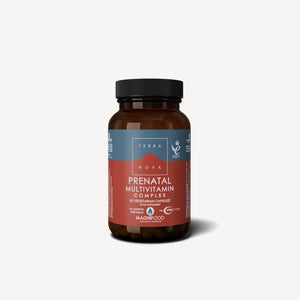
Should everyone trying to conceive take a prenatal?
Yes – and starting at least three months before trying was the recommendation, specifically because of folic acid and its role in preventing neural tube defects. Beyond that, a good prenatal supplement covers the gaps most women carry: vitamin D, iron, and omega-3 in particular. Dr Lizle recommended continuing through pregnancy, through breastfeeding, and into the postpartum period – because that stage is when nutrition often takes its sharpest dip.
One Tip Everyone Can Start Today
"Know where you stand. You can't make any plans or adjust your fertility goals until you know where you are in your egg reserve, what your likely egg quality is, and whether there are any obstacles to falling pregnant. Get that information – and then take action from based on that."
Fertility is one of the areas of women's health where knowledge has the most direct, practical value – and yet it's one of the last places most women look until something feels wrong. As Dr Lizle Oosthuizen reminded us, the most powerful thing you can do is not wait for urgency to force the question. Understand where you are, what your options are, and what – if anything – needs attention.
Use code HERHEALTH at checkout for 20% off your next order.
This content is for informational purposes only and does not constitute medical advice. Always consult with your healthcare provider or a qualified aesthetic practitioner before starting any new supplement, skincare regimen, or treatment. This unregistered medicine has not been evaluated by SAHPRA for its quality, safety or intended use. If symptoms persist, consult your healthcare provider.