Sexual health is one of the most personal, most misunderstood, and least openly discussed aspects of women's well-being. In this episode of the Her Health™ Podcast, Dr Catriona Boffard – sexologist, psychotherapist, and one of the first South Africans to qualify with the European Federation of Sexology – brought a rare combination of clinical depth and genuine warmth to a conversation often shied away from.
From pain during sex and desire discrepancy to neurodiversity, love languages, and the role of the brain in pleasure, this episode offers permission to stop measuring yourself against a standard that was never yours to begin with.
Rapid Fire: What Affects Sexual Health and Satisfaction, Rated
We asked Dr Catriona to rate common factors from zero (no effect on sexual health and satisfaction) to 10 (major effect):
- Neurodiversity – 10/10: One of the most underlooked factors in sexual experience – and a core focus of Dr Catriona's current work.
- Pain – 10/10: Unwanted pain during sex is one of the most common reasons women seek help – and one of the most treatable.
- Trauma – 8–9/10 if unprocessed: Context-dependent, but unprocessed trauma has a significant and well-documented impact.
- Stress and anxiety – 10/10: The nervous system doesn't distinguish between stress types. All of it lands in the body.
- Sleep quality – 8/10: Sleep underpins everything – including desire, regulation, and emotional capacity.
- Small children – 10/10: Dr Catriona has one, and was clear: the demand on the system is total.
- Healthy diet and lifestyle consistency – 8/10: Systemic health supports everything, including sexual well-being.
- Mismatched desire – 9/10 in couples who are struggling with it: Context-dependent – but when it becomes a source of personal shame or conflict, the impact is significant.
- Hormones – 10/10: Particularly relevant at life-stage transitions – postpartum, perimenopause, and menopause.
- Cultural or social upbringing – 10/10: The messages we receive about sex in childhood and adolescence wire neural pathways that persist into adulthood.
What Is a Sexologist – and Why Would You See One?
Dr Catriona qualified as a sexologist in 2013 – one of the few in South Africa at the time with that specific certification. Her work sits at the intersection of sexual health and psychology: understanding people's sexual experiences, identities, and challenges through a biological, psychological, and social lens.
In the UK, her title is psychosexual and relationship therapist. In practice, the three most common reasons people come to see her are:
- Mismatched desire – individuals and couples navigating different levels of interest in sex.
- Pain during sex – specifically unwanted, penetrative pain that has become debilitating.
- Neurodiversity and sexual health – increasingly the focus of her clinical work, and still significantly under-researched.
Unwanted Pain During Sex – What Causes It and How It's Treated
Dr Catriona was careful to clarify upfront: she was talking specifically about unwanted pain – not the kind some people find pleasurable. The presentation she described most commonly was women for whom penetration of any form was excruciating, sometimes impossible.
"It's like hitting a brick wall. That's a typical thing I hear."
Some of her clients couldn't have a pap smear, use a tampon, or insert a finger because their pelvic floor muscles were so tight and locked in an anxiety-pain response that nothing was physically possible.
The causes are multiple. On the physical side: dermatological conditions affecting the vulva, endometriosis, hormonal conditions, and other gynaecological factors. On the psychological side: anticipatory anxiety – the expectation of pain causing the body to brace, which then causes the pain. This, she noted, is the same mechanism behind the myth that losing your virginity is inherently painful.
Other contributors include trauma, religious or cultural messaging around sex received in childhood, and deeply held stories about what sex is supposed to feel like or look like.
Interestingly, Dr Catriona noted that for many of her clients, the goal isn't intercourse at all – it is simply being able to have a pap smear or use a tampon so they can swim.
Desire Discrepancy – Why It's Inevitable and What to Do About It
Desire discrepancy – wanting sex at different times or different frequencies to a partner – is the single most common reason people come to see Dr Catriona. After 15 years of practice, she was emphatic: it is an inevitability in long-term relationships, not a failure.
Part of the problem, she explained, is the entirely unrealistic representation of sex in media and pornography – where desire is instant, mutual, effortless, and the outcome is always guaranteed.
"Learning about sex from porn is like trying to learn to drive by watching Formula 1. It's not just unhelpful – it's a complete misrepresentation of what sex actually looks like for most people."
Desire discrepancy is shaped by everything: upbringing, cultural messaging, the stories women had been told about what they should and shouldn't want, and deeply embedded beliefs about whether it was acceptable for them to have desire at all.
"Neurons that fire together wire together."
Dr Catriona was clear: if a girl grew up receiving the message that sex is dangerous, shameful, or not for women, those neural pathways were travelled consistently throughout childhood and adolescence. By adulthood, they are entrenched – and no amount of wanting things to be different could override them without deliberate, supported work.
Neurodiversity and Sexual Health – The Most Underlooked Connection
This was the section of the conversation Dr Catriona was most passionate about – and the area she believed was most significantly underrepresented in both research and clinical practice.
Neurodiversity describes the natural divergence in human neurotype. Under its umbrella sit ADHD, autism, OCD, borderline personality disorder, dyslexia, dyspraxia, sensory processing differences, and more – often overlapping. Dr Catriona spoke openly about her own ADHD brain and the sensory processing challenges that come with it: sensitivity to loud noises, bright lights, and overwhelm when systems were already taxed.
The implications for sexual health are profound and largely unaddressed. Sensory profiles matter enormously. A touch that is welcome and pleasurable to one person could be physically agitating to a neurodivergent nervous system. The type of touch, the lighting in a room, the sounds, the physical position – all of it feeds into whether a system feels safe and receptive, or overwhelmed and on alert.
Perimenopause, Neurodiversity, and the Window of Tolerance
Dr Catriona used a memorable framework to explain why perimenopause hits neurodivergent women so differently. The brain, she explained, acts as the conductor for hormones – it doesn't produce them, but it directs how they are experienced throughout the body. For a neurodivergent brain already operating at 40% capacity on a good day and 15% on a difficult one, that conducting job becomes increasingly difficult to manage as hormones shift.
She introduced the concept of the window of tolerance – the emotional range within which a person can function and regulate. For a neurotypical brain, that window is roughly two to three centimetres wide. Something startling might cause a spike, but the person modulates back to baseline relatively quickly. For a neurodivergent brain, that window is closer to one centimetre – meaning the threshold for tipping into a hyperaroused state (anxiety, anger, overwhelm) or a hypoaroused state (numbness, dissociation, low mood) is far lower, and the return to baseline far harder.
Then life happens. A baby shrinks the window to half a centimetre. Relationship strain shrinks it further. Perimenopause – with its hormonal unpredictability and the added demand it places on an already stretched system – can reduce it to almost nothing. It isn't weakness or dysfunction. It's a brain working beyond its physiological limit, with very little left in reserve.
The Division of Labour, Demand, and Desire
Dr Catriona referenced a 2021 Canadian study that found a direct link between the division of domestic labour and sexual desire in heterosexual couples. The higher one partner's load, the lower their desire. Dr Catriona noted that this isn't a neurodiversity-specific finding – it applies broadly. And it underscores something she returned to repeatedly: sexual health doesn't exist in a vacuum. It is inseparable from the full context of a person's life.
She painted a vivid picture: a woman who has carried the full mental and domestic load of a day – school run, work, dinner, homework – whose system is already at capacity. Her partner approaches her in the kitchen with a spontaneous touch. For a neurodivergent brain already at its limit, that additional demand doesn't land as affection. It lands as another demand placed on an already depleted system.
The solution, she was clear, isn't the neurodivergent partner's problem to fix alone. It requires communication, curiosity, and a partner willing to ask rather than assume.
"A bum slap should be followed up with: I just wanted to do that because I think you're beautiful. Can I do the dishes for you?"
Remove the demand. Change the context. Ask what kind of touch actually feels welcome – because deep pressure might be grounding and connecting where a light smack might be system-shocking.
Community Questions Answered
What is normal when it comes to wanting sex?
Dr Catriona wouldn't name a number – and explained why. Quantity is an unhelpful metric. She suggested reframing the question entirely: is this typical for me? Has something changed? If yes – that's worth exploring.
Can a belief override physiology?
Completely, she said. The brain is the most important sexual organ. It modulates whether touch is experienced as pleasure or agitation, whether desire arises or shuts down, whether the body feels safe or on alert. Growing up with shame-based messaging around sex creates robust, entrenched neural pathways that don't dissolve on their own.
Do supplements play a role in sexual health?
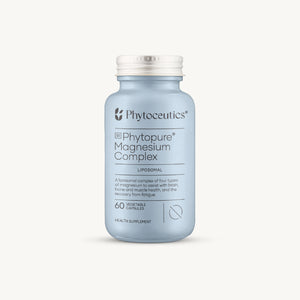
No supplement will directly create desire – Dr Catriona was honest about that. But systemic health is the foundation for everything, including sexual well-being. Sleep, in particular, she singled out as one of the most significant factors: when sleep improves, emotional regulation improves, capacity improves, and with it, the conditions in which desire can actually arise. Magnesium for sleep support, iron supplementation for those with deficiency, vitamin D, and targeted nutritional support at different life stages – postpartum, perimenopause, menopause – all contribute to a system that functions better. And a system that functions better is more capable of experiencing pleasure.
One Tip Everyone Can Start Today
Consider therapy not as a last resort, but as a preventative tool. The average couple waits six years from when a problem starts to seek help. Seeing a therapist once a month, like a check-in, is protective – not a sign that something is broken.
And alongside that:
"Talk about sex. People have sex and then it's not happening and then it becomes the elephant in the room. Normalise it as a conversation – not just when it's a problem, but all the time."
Sexual health is deeply individual, profoundly shaped by the brain, and far more influenced by context, history, and nervous system state than most of us have ever been taught. As Dr Catriona Boffard reminded us, the goal isn't to be normal. It is to understand yourself – what feels good, what doesn't, what has changed, and what you need. That knowledge, shared honestly with a partner and supported by a professional where needed, is where things can genuinely shift.
Use code HERHEALTH at checkout for 20% off your next order.
This content is for informational purposes only and does not constitute medical advice. Always consult with your healthcare provider or a qualified mental health professional before making any changes to your health routine, especially if you are pregnant, nursing, have a medical condition, or are taking prescription or chronic medication. This unregistered medicine has not been evaluated by SAHPRA for its quality, safety or intended use. If symptoms persist, consult your healthcare provider.